

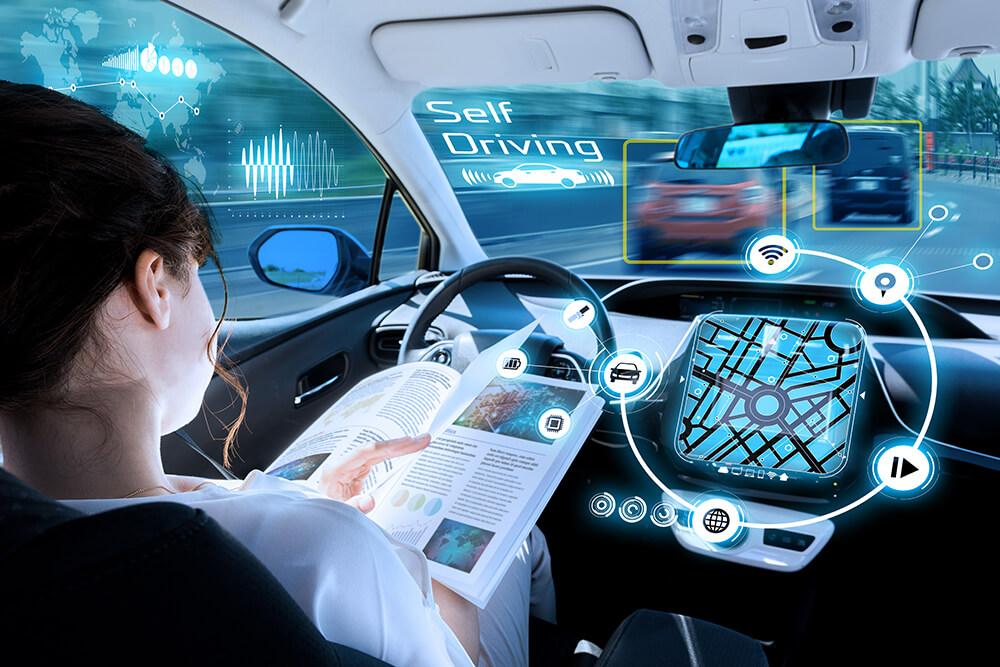
Sony and Honda have announced a strategic partnership to leverage artificial intelligence in advancing self-driving vehicle technology and in-car entertainment systems, signaling a significant push in the automotive and tech industries. According to a report by Nikkei Asia, the collaboration aims to combine Sony’s expertise in imaging, sensors, and AI with Honda’s automotive engineering capabilities to accelerate the development of autonomous driving solutions and enhanced digital experiences for drivers and passengers. This alliance reflects a growing trend among traditional automakers and tech companies to join forces in shaping the future of mobility.
Sony Honda partnership leverages AI to revolutionize autonomous driving experiences
In a groundbreaking collaboration, Sony and Honda are combining their technological prowess to redefine the future of autonomous vehicles. By integrating Sony’s expertise in advanced sensors and AI-driven entertainment systems with Honda’s automotive engineering, the partnership aims to create vehicles that not only drive themselves safely but also deliver immersive in-car experiences. Central to this initiative is the use of sophisticated artificial intelligence algorithms that enhance real-time decision-making on the road, ensuring greater accuracy in navigation and obstacle detection, while simultaneously personalizing entertainment tailored to each passenger.
The duo’s ambitious project highlights several key innovations designed to elevate autonomous driving:
- AI-enhanced safety protocols: Utilizing machine learning models that predict and respond dynamically to complex traffic situations.
- Seamless human-machine interaction: Voice and gesture recognition systems enabling passengers to control vehicle functions effortlessly.
- Integrated entertainment platform: Adaptive multimedia content that adjusts based on mood and journey progress, creating a personalized travel environment.
| Feature | Benefit | Status |
|---|---|---|
| AI Driving Assist | Enhanced road safety | Testing phase |
| Custom Entertainment Hub | Passenger engagement | Development |
| Gesture Controls | Hands-free operation | Prototype |
Integrating advanced AI systems to enhance in-car entertainment and user engagement
Sony and Honda are pushing the boundaries of automotive technology by embedding sophisticated AI frameworks that reshape how passengers interact with their vehicles. These systems utilize deep learning to tailor entertainment options in real-time, transforming every journey into a personalized experience. From adaptive soundscapes that respond to ambient noise to intelligent content recommendations based on user preferences and mood detection, the in-car environment is becoming a dynamic hub for engagement rather than merely a means of transport.
Beyond content delivery, the AI’s integration includes advanced voice recognition and gesture controls, allowing passengers to seamlessly operate multimedia functions without distraction. The collaboration also focuses on predictive engagement features, using sensor data to anticipate user needs such as adjusting lighting, climate, or entertainment intensity. This holistic approach ensures that technology enriches the drive, fostering a safer and more immersive atmosphere inside the cabin.
- AI-driven personalized content curation
- Real-time mood and gesture recognition
- Voice-controlled multimedia interfaces
- Predictive environmental adjustments
- Seamless integration with self-driving features
| Feature | Benefit |
|---|---|
| Personalized Soundscapes | Enhances passenger comfort and focus |
| Gesture Controls | Minimizes driver distraction |
| Predictive Climate Control | Optimizes cabin environment automatically |
| Mood-based Content Recommendations | Improves user satisfaction and engagement |
Industry experts recommend prioritizing data privacy and seamless human machine interaction
As Sony and Honda innovate at the intersection of AI-driven self-driving technology and immersive entertainment, industry leaders emphasize the necessity of safeguarding user data. With vehicles increasingly reliant on connected systems and personalized AI algorithms, protecting sensitive information from breaches is paramount. Experts advocate for stringent data encryption protocols and transparent user consent frameworks to build trust and ensure compliance with evolving global privacy regulations.
Equally important is the need for intuitive human-machine interfaces that elevate the driving experience without compromising safety. Analysts highlight key elements for success, including:
- Natural language processing that allows effortless voice commands
- Adaptive touchscreen displays that minimize driver distraction
- Seamless integration between entertainment systems and driving controls
These advancements aim to create a harmonious balance where technology enhances convenience and engagement while maintaining rigorous standards of privacy and operational transparency.
| Priority | Focus Area | Benefit |
|---|---|---|
| High | Data Encryption | Enhanced Security |
| Medium | Voice Recognition | Hands-Free Control |
| High | User Consent | Regulatory Compliance |
| Medium | UI Design | Reduced Distraction |
Insights and Conclusions
As Sony and Honda continue to merge their expertise in AI, automotive technology, and entertainment, their collaboration signals a significant step forward in the evolution of self-driving vehicles. By leveraging artificial intelligence not only to enhance autonomous driving capabilities but also to create immersive in-car experiences, the partnership aims to redefine the future of mobility. Industry observers will be watching closely as these innovations move from development to deployment, potentially setting new standards for the convergence of technology and transportation.