

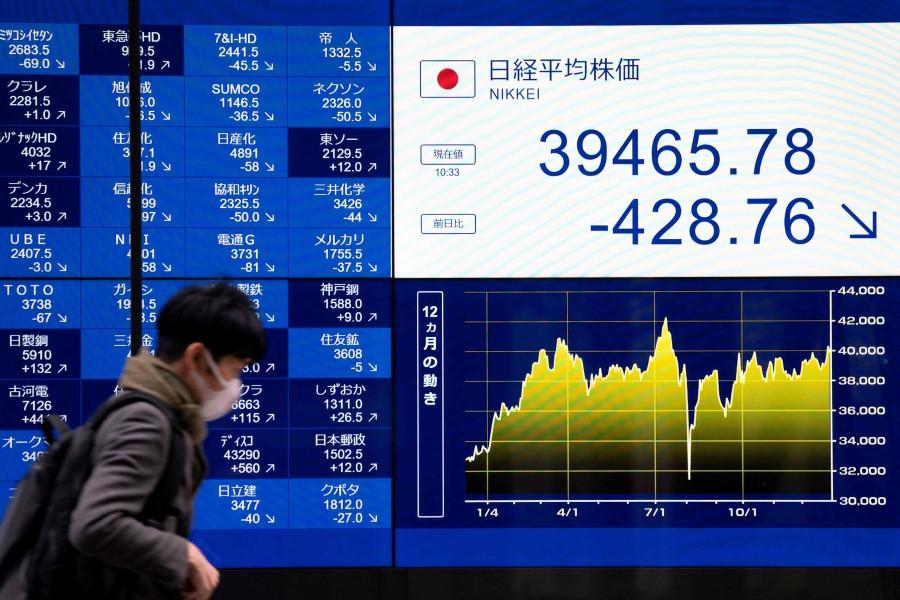
Asia’s technology sector faced a sharp downturn Tuesday, mirroring losses on Wall Street as investor confidence wavered amid growing doubts over the future of artificial intelligence and mounting government policy uncertainties. Shares of major tech firms across the region slid, reflecting broader market nerves about regulatory challenges and the pace of AI-driven growth, signaling a cautious outlook among global investors.
Asia Tech Stocks Follow Wall Street Downturn Amid Rising AI Skepticism
Asian technology shares have faced significant pressure as investors grow increasingly cautious, reflecting a broader Wall Street selloff triggered by mounting skepticism over artificial intelligence’s near-term potential. Concerns around the hype surrounding AI innovations have led traders to trim exposures, particularly in high-valuation tech stocks formerly buoyed by optimism. Meanwhile, ongoing governmental policy uncertainties within key Asian markets have added another layer of volatility, spurring further reticence among institutional buyers. This cocktail of factors has weighed heavily on major indexes, with losses broad-based across semiconductor firms, software developers, and hardware manufacturers.
- Corporate earnings: Mixed quarterly results from leading AI-dependent companies dampened enthusiasm.
- Regulatory outlook: Ambiguous government frameworks in China and South Korea fueled apprehension.
- Global market linkages: Declines in U.S. tech giants triggered synchronous selloffs in Asian counterparts.
| Index | Day Change | Year-to-Date |
|---|---|---|
| Hang Seng Tech | -2.7% | +5.3% |
| Nikkei 225 Tech | -1.9% | +8.7% |
| KOSDAQ | -3.1% | +6.1% |
Market participants now await clearer signals on AI’s commercial viability and regulatory direction in Asia, which will likely shape the sector’s performance through the rest of the year. Analysts caution that short-term volatility may persist as investors recalibrate expectations in this evolving landscape.
Government Policy Uncertainty Weighs Heavily on Investor Confidence in Asia
Investor sentiment across key Asian markets has been significantly dampened by rising concerns over government policy unpredictability. The lack of clear regulatory direction, coupled with sudden shifts in trade and technology policies, has created a volatile environment for tech stocks, leading to sharp sell-offs. Market participants are particularly wary of inconsistent enforcement and abrupt policy reversals that can undermine corporate strategies and long-term growth prospects.
Factors contributing to the uncertainty include:
- Unclear AI regulations affecting innovation and compliance costs.
- Trade tensions impacting supply chains and export-driven tech companies.
- Tax reforms that could alter profitability for major players.
- Geopolitical risks increasing the unpredictability of market access.
| Policy Area | Impact on Tech Stocks | Market Reaction |
|---|---|---|
| AI Regulations | Increased compliance costs | Negative |
| Trade Policies | Supply chain disruptions | Volatile |
| Tax Changes | Reduced profitability | Bearish |
Strategic Moves for Investors Navigating Volatile Tech Markets and Regulatory Risks
Investors facing the turbulent waters of Asia’s tech markets amid wavering AI enthusiasm and escalating government scrutiny must prioritize agility and diversification. With regulatory landscapes in flux and market sentiment highly sensitive to global cues, taking a measured approach toward portfolio allocation can cushion against sharp downturns. Emphasizing companies with strong fundamentals, transparent governance, and adaptive innovation strategies remains a prudent route. Meanwhile, keeping an eye on sector rotation opportunities-such as cloud services, cybersecurity, and semiconductor manufacturers-can help balance growth potential against cyclical risks.
Risk management tactics have never been more critical, especially as uncertainties regarding AI’s trajectory and government policies persist. Utilizing protective instruments like options or setting predefined stop-loss levels may shield capital during unexpected sell-offs. Furthermore, frequent reassessment of geopolitical developments and regulatory announcements is key to staying ahead of market disruptions. The table below outlines core strategic moves that investors might consider to navigate this complex environment effectively: