

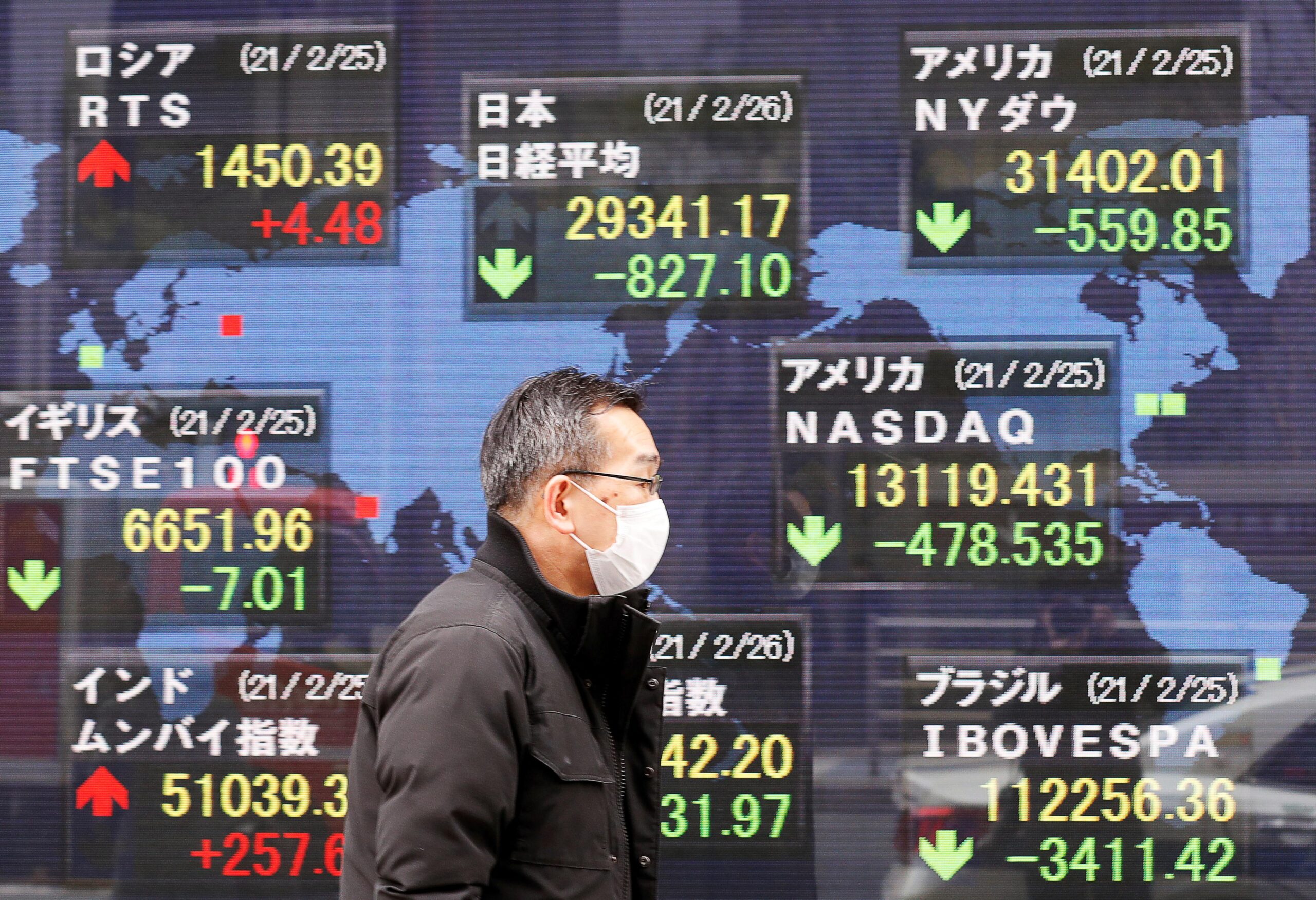
Asian stock markets slipped Thursday as renewed concerns over U.S. tariffs weighed on investor sentiment, with technology shares leading the decline. President Donald Trump’s latest tariff announcements intensified fears of escalating trade tensions, prompting cautious trading across the region. However, Japan’s market bucked the downward trend, supported by easing consumer price inflation data that alleviated worries over potential monetary tightening. The mixed performance highlights the market’s sensitivity to geopolitical developments and economic indicators amid an uncertain global outlook.
Asia Stocks Slide Amid Renewed Concerns Over Trump Tariffs and Technology Sector Weakness
Asian markets experienced a broad sell-off as investor sentiment soured due to escalating concerns over the potential reintroduction of tariffs by the United States under former President Donald Trump’s administration. The renewed trade fears weighed heavily on technology stocks, a sector that has already been grappling with waning demand and supply chain disruption worries. Major indices across the region, including Hong Kong’s Hang Seng and South Korea’s KOSPI, faced downward pressure, reflecting a cautious stance amid the geopolitical uncertainties.
Contrasting the regional decline, Japanese equities received some support following the release of a cooler-than-expected consumer price index (CPI) report. The data hinted at subdued inflationary pressures, which analysts believe may prompt the Bank of Japan to maintain its ultra-loose monetary policy for longer. Key factors influencing the market movement included:
- Trump tariff concerns: Talks of possible tariff reinstatements unsettled market confidence.
- Technology sector weakness: Slumping semiconductor stocks and chipmakers dragged indices down.
- Japan’s CPI report: Lower inflation readings alleviated fears of tightening monetary policies.
| Index | Change (%) | Key Drivers |
|---|---|---|
| Hang Seng | -1.4 | Tech sell-off, Tariff fears |
| KOSPI | -1.1 | Semiconductor weakness |
| Nikkei 225 | +0.3 | Cooling CPI, Monetary policy optimism |
Japan Markets Find Support as Cooling CPI Eases Inflation Fears
Japanese equities showed resilience amid broader Asia market downturns, largely buoyed by recently released data indicating a moderation in consumer price inflation. The softer CPI reading has significantly cooled concerns over aggressive monetary tightening, which investors had feared would stifle economic growth. Key indices, including the Nikkei 225 and the Topix, climbed modestly as traders digested the relief that easing inflationary pressures might provide. Market participants remain cautious, however, as geopolitical tensions and trade uncertainties continue to cast shadows over the region.
Market highlights include:
- Japan’s core CPI rose 2.1% year-on-year, below forecasts
- Strong domestic demand supports consumer-driven sectors
- Technology shares weighed down after global chip stocks faltered
- Currency stabilized near 146 yen to the dollar, aiding exporters
| Index | Change (%) | Latest Level |
|---|---|---|
| Nikkei 225 | +0.5 | 29,740 |
| Topix | +0.4 | 2,040 |
| Hang Seng | -1.2 | 19,555 |
| Kospi | -0.8 | 2,510 |
Investor Strategies to Navigate Volatility in Asian Equities and Sector-Specific Risks
Investors facing the turbulence in Asian equities amid escalating trade tensions and sector-specific challenges must adopt strategies balancing risk and opportunity. Diversification across markets within Asia remains crucial, especially given the varying economic impacts of tariffs and policy changes. For example, while technology shares have been under pressure due to heightened regulatory scrutiny and trade-related uncertainties, sectors like consumer staples and healthcare offer relative stability. Hedging currency exposure and closely monitoring inflation indicators-such as Japan’s recent cooling CPI-can also help cushion against volatility.
Focusing on sector-specific dynamics, investors should weigh growth prospects against increased risks in technology and industrials, which are directly affected by the US-China trade dispute. Conversely, sectors less tied to export cycles or geopolitical frictions, such as utilities or telecommunications, may provide defensive anchors. The table below illustrates a basic risk-reward comparison of prominent Asian sectors under current market conditions:
| Sector | Volatility | Growth Potential | Trade Exposure |
|---|---|---|---|
| Technology | High | High | High |
| Consumer Staples | Low | Moderate | Low |
| Industrials | Medium | Moderate | High |
| Healthcare | Low | Moderate | Low |
| Utilities | Low | Low | Low |
- Regular portfolio reviews: Align allocations with changing geopolitical and economic signals.
- Focus on fundamentals: Prioritize companies with strong balance sheets and resilient cash flow.
- Use of derivatives: Employ options or futures to hedge downside risk during uncertain periods.
Concluding Remarks
As global markets continue to navigate the complex interplay of trade tensions and economic indicators, investor sentiment remains cautious. While U.S. tariff concerns and technology sector declines have weighed on Asian stocks, Japan’s market showed resilience, bolstered by easing inflation pressures. Market participants will be closely monitoring upcoming policy developments and economic data for further direction amid ongoing geopolitical uncertainties.