

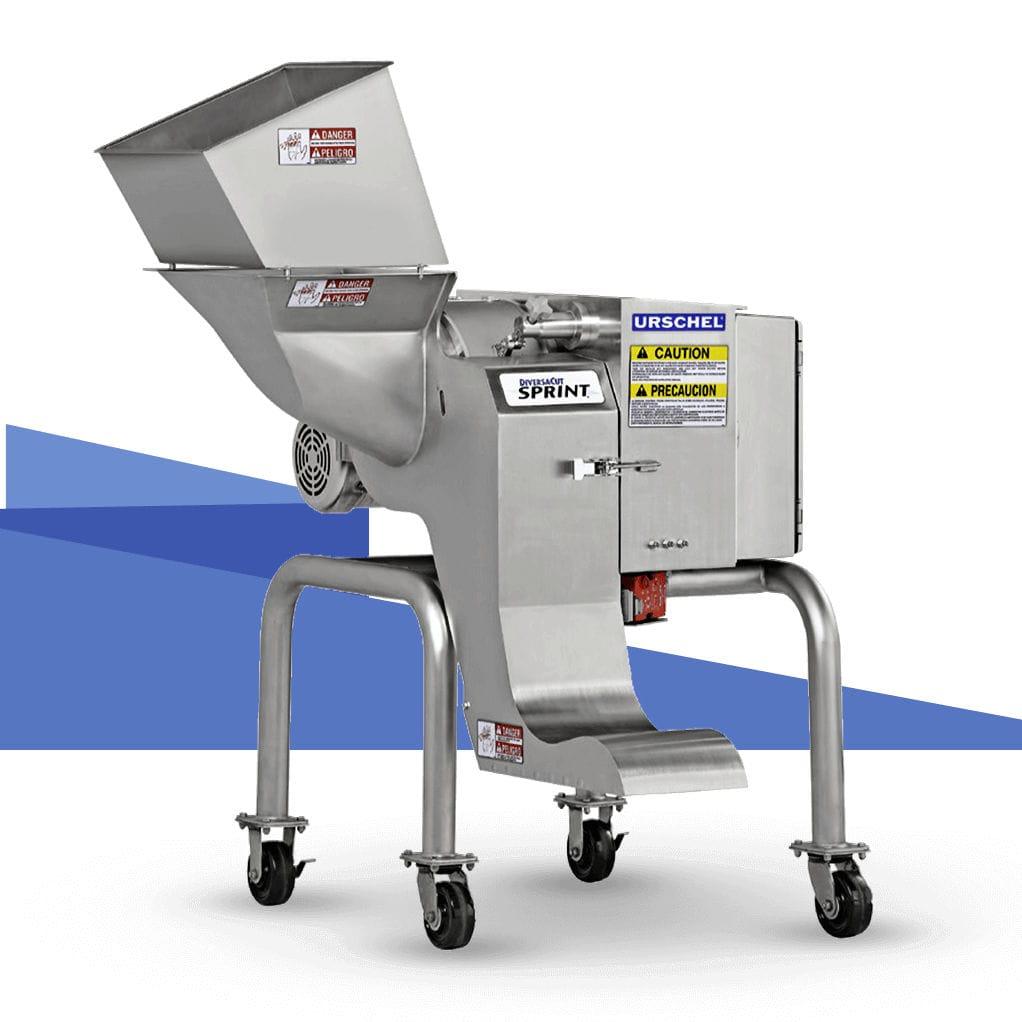
Urschel Laboratories Expands into Asia with Minority Investment in Kronen Systems
Urschel Laboratories has taken a strategic step to broaden its footprint in the Asia-Pacific food and beverage market by acquiring a minority stake in Kronen Systems, a recognized provider of food processing technologies. The minority investment signals Urschel’s intent to combine its longstanding precision-cutting expertise with Kronen’s automation and processing platforms to better serve the region’s evolving manufacturers and processors.
Strategic Rationale: Why the Deal Matters
This partnership is more than a financial transaction; it aligns two complementary capabilities to address rising demand for smarter, more efficient food-processing equipment across Asia. Manufacturers in the region are increasingly prioritizing automation, traceability and sustainability – trends that favor collaborative approaches between mechanical specialists and automation-driven solution providers. By partnering with Kronen, Urschel positions itself to accelerate product innovation, extend market access and offer integrated systems tailored to local industry needs.
What Each Partner Contributes
- Urschel Laboratories: Decades of experience in precision cutting and mechanical design, strong brand recognition in global slicing and dicing technologies, and a portfolio of durable equipment used across fresh and frozen processing lines.
- Kronen Systems: Expertise in automation, process flow optimization and industry-specific software, plus established relationships with Asian food processors and distributors.
Think of the alliance as pairing a master chef’s knife skills with the efficiency of a well-programmed kitchen robot – together they can deliver higher quality output, faster throughput and more consistent results.
Key Advantages for Processors and Suppliers
- Integrated Technology Development
- Joint engineering efforts will enable integrated lines that combine high-precision cutting with automated handling, sorting and quality inspection.
- Expected outcome: shorter development cycles for combined solutions and faster time-to-market for new product variants.
- Accelerated Market Access in Asia
- Kronen’s regional networks and service footprint provide Urschel with a springboard to reach small-to-large processors in Southeast and East Asia.
- Result: improved local support and tailored offerings for region-specific products like tropical fruits and rice-based snacks.
- Operational and Sustainability Gains
- Collaborative system design aims to reduce manual handling, lower product loss and increase energy efficiency across processing operations.
- Industry surveys suggest modern integrated lines can improve throughput by roughly 15-40% and cut product waste by up to a quarter, depending on the process and baseline technology.
- Broadened Product Portfolio
- The partnership will allow both firms to bundle hardware, software and after-sales services, enabling solutions for sectors from fresh produce and ready meals to meat and poultry processing.
Projected Industry Impact Across Asia
Market Context
- Asia-Pacific continues to be a dominant region for food processing demand, accounting for a substantial share of global equipment and automation purchases. Growing urbanization, changing diets and export-driven supply chains are driving investment in processing modernization.
Operational Outcomes (illustrative estimates)
- Throughput improvements: 15-40% depending on automation level and product.
- Waste reduction: up to 25% via optimized cutting accuracy and reduced manual trimming.
- New product capability: support for novel processed items (e.g., pre-cut tropical fruit mixes, value-added vegetable blends) that can open export opportunities.
Practical Example
A medium-sized fresh-cut facility in Malaysia implementing an integrated Urschel-Kronen line could, for instance, move from manual trimming and packaging to automated slicing, in-line inspection and robotic packing – potentially increasing daily output while reducing labor needs and variability in portion size.
How Manufacturers Should Respond: Expert Guidance
To extract maximum value from the Urschel-Kronen collaboration, industry specialists recommend a proactive, structured approach:
- Start with pilot projects: Deploy integrated equipment on selected lines to validate real-world benefits before large-scale rollout.
- Form cross-functional teams: Bring together engineering, production, quality and procurement staff to plan changeover and capture process knowledge.
- Embrace data-driven operations: Use sensors and analytics to monitor yield, downtime and product quality; this supports continuous improvement and predictive maintenance.
- Invest in workforce training: Upskilling operators and maintenance crews ensures new systems are used effectively and uptime is maximized.
- Prioritize after-sales service and spare-part readiness: Localized service capabilities reduce downtime risk and improve total cost of ownership.
Implementation Roadmap (typical timelines)
- Pilot installation and validation: 3-6 months
- Automation and line optimization: 4-9 months
- R&D co-development of new products: 6-12 months
Implications for Competitiveness and Exports
By combining precision cutting with advanced automation and localized support, processors can improve product consistency and compliance with international food safety standards – factors that strengthen export competitiveness. Improved yields and reduced variability also enhance profitability, particularly for commodity processors where margins are tight.
Looking Ahead
Urschel’s minority investment in Kronen Systems represents a deliberate move into Asia’s rapidly modernizing food-processing ecosystem. The alliance creates a pathway for integrated solutions that address speed, quality and sustainability – priorities for processors aiming to serve both domestic consumers and global markets. Observers should expect phased technology rollouts, localized service enhancements and new co-developed product lines as the companies align their engineering and commercial efforts.
For processors and supply-chain partners, the development is a cue to evaluate automation readiness, pursue pilot collaborations and prepare teams for technology-driven process transformation.