

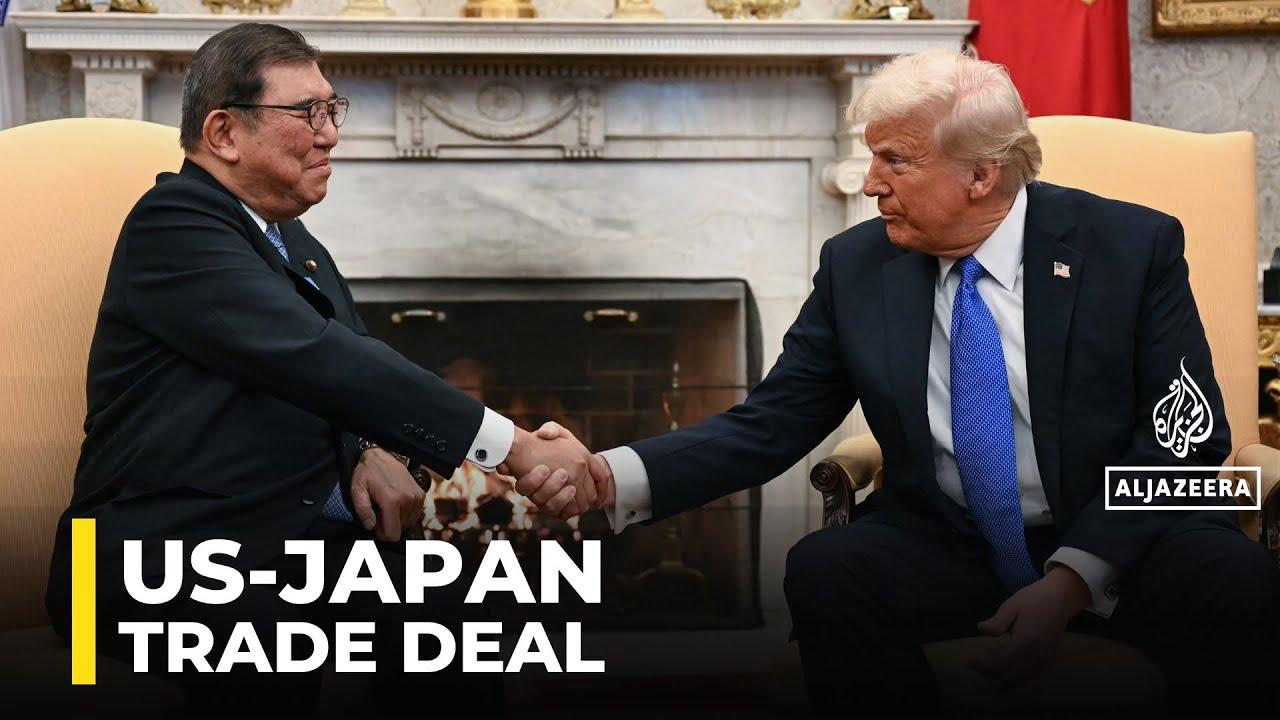
The recent US-Japan trade agreement marks a significant shift in the economic landscape of the Asia-Pacific region and beyond. As two of the world’s largest economies tighten their commercial ties, the deal is expected to reshape supply chains, influence regional trade dynamics, and signal a strategic response to rising global economic competition. This article explores what the pact means for Asia’s economic future and its broader implications on international trade and geopolitical relations.
Implications of the US-Japan Trade Agreement for Regional Economic Dynamics
The US-Japan trade agreement is set to reshape the economic landscape of East Asia by strengthening supply chain resilience and enhancing market access for both countries. This deal not only consolidates bilateral ties but also sets a precedent for deeper integration in the Asia-Pacific region. Governments and businesses across Asia are now reassessing their trade strategies to align with the new US-Japan framework, which signals a potential shift in regional power balances with implications for emerging economies.
Key areas impacted by the agreement include technology transfer, tariff reductions, and regulatory cooperation, which together promote a more open and competitive economic environment. Several Asian economies may benefit indirectly through improved trade routes and investment flows, while others may face increased competition. Below is a summary of anticipated regional impacts:
- Supply Chain Optimization: Enhanced collaboration could diversify supply sources, reducing reliance on single markets.
- Investment Flows: Increased US and Japanese investments might spur growth in ASEAN countries.
- Competitive Pressure: Smaller economies may need to upgrade their industrial policies to stay competitive.
- Regulatory Standards: Harmonization efforts may drive regional policy alignment and modernization.
| Impact Area | Potential Benefit | Regional Challenges |
|---|---|---|
| Technology Transfer | Accelerated innovation cycles | Intellectual property disputes |
| Trade Tariffs | Lower consumer prices | Revenue losses for tariff-dependent sectors |
| Regulatory Cooperation | Streamlined customs procedures | Implementation disparities among countries |
Assessing the Deal’s Impact on Global Supply Chains and Market Access
The US-Japan trade deal introduces significant shifts in global supply chains, particularly emphasizing resilience and diversification. By reducing tariffs on key sectors such as automotive and electronics, the agreement encourages manufacturers to rethink their production hubs to better navigate geopolitical tensions and disruptions. This realignment is expected to boost regional integration within Asia, as companies recalibrate to minimize reliance on any single market or logistic corridor.
Market access, meanwhile, sees notable expansion with the deal streamlining export procedures and opening new avenues for SMEs in both countries. Key benefits include:
- Enhanced tariff reductions that make Asian exports more competitive globally.
- Improved digital trade standards, advancing cross-border data flow and e-commerce.
- Greater protection of intellectual property rights, fostering innovation.
Below is a simplified overview of tariff changes affecting principal sectors:
| Sector | US Tariff Reduction | Japan Tariff Reduction | |||||||||
|---|---|---|---|---|---|---|---|---|---|---|---|
| Automotive | Up to 15% | Up to 10% | |||||||||
| Electronics | 10% | 5% | |||||||||
| Agriculture | Summary of the US-Japan Trade Deal Impact Supply Chain Shifts:
Market Access Improvements:
– Enhanced tariff reductions increasing competitiveness of Asian exports. Tariff Reductions Overview: | Sector | US Tariff Reduction | Japan Tariff Reduction | If you want me to complete or update the tariff table and analysis with the missing agriculture sector details or any other part, just share the rest of the data! Strategic Recommendations for Asian Economies to Leverage Emerging OpportunitiesAsian economies stand at a pivotal juncture to harness the ripple effects from the US-Japan trade agreement. To capitalize on this, nations should prioritize diversifying trade partnerships beyond traditional markets by fostering stronger intra-Asian supply chains. This approach not only minimizes dependency on Western economies but also enhances resilience against global shocks. Encouraging investment in high-tech manufacturing and digital infrastructure will equip countries with the tools needed to integrate seamlessly into evolving global value chains powered by the deal’s new standards. Furthermore, regulatory synchronization and streamlined customs procedures across Asia could unlock new growth avenues by reducing trade friction. Policymakers must push for enhanced cooperation on environmental and labor standards, aligning with provisions emphasized in the US-Japan pact to attract sustainable investments. The table below outlines key focus areas and potential benefits Asian economies could target moving forward:
In SummaryAs the US-Japan trade deal comes into effect, its implications extend far beyond the two nations involved. Analysts suggest it could reshape regional economic dynamics in Asia, influence supply chains, and set new standards for future trade agreements worldwide. While proponents hail it as a step toward deeper cooperation and economic resilience, critics caution about potential challenges for smaller economies navigating the shifting landscape. Ultimately, the deal underscores the evolving nature of global trade relations in an increasingly interconnected world. |