

Ancient Preservation Rewrites the Story: Discovery of the World’s Oldest Mummies on the Central Anatolian Plateau
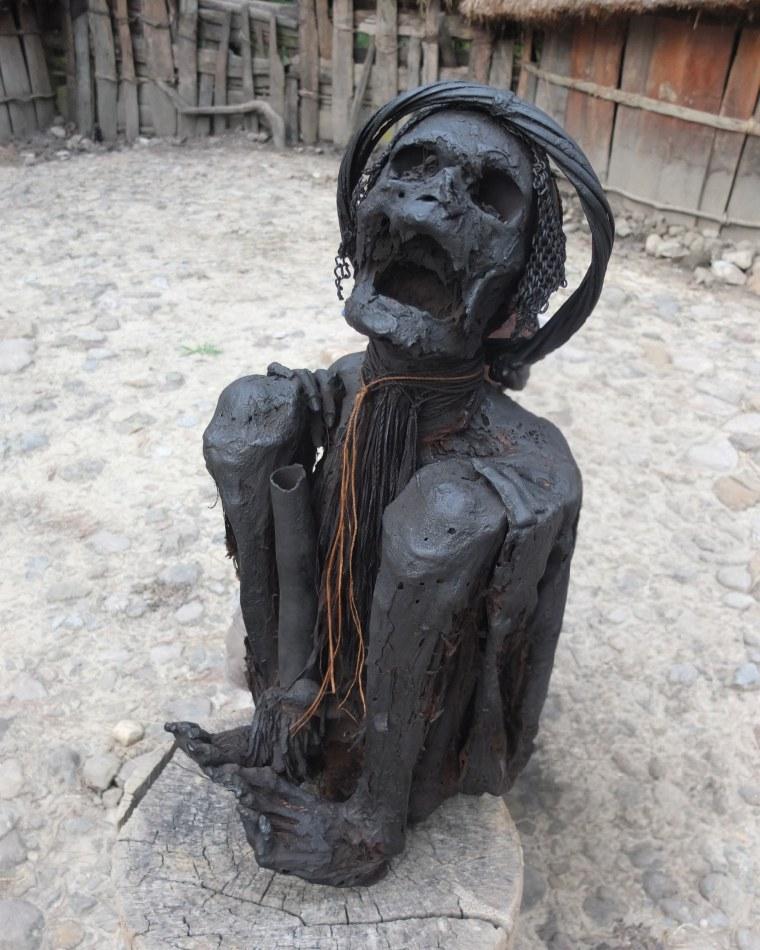
A startling archaeological find in the highlands of central Anatolia has yielded human remains that may represent the world’s oldest known mummies. The excavation, led by an international team of archaeologists, reveals remarkably preserved bodies and burial complexes that push back timelines for organized mortuary practices and mummification beyond the Nile Valley. Early results are reshaping our understanding of how and where complex funerary traditions first developed.
A Surprising Find in an Overlooked Landscape
– Location and context: The assemblage was excavated in a remote section of the Central Anatolian Plateau, a region long considered peripheral to major prehistoric cultural centers.
– Preliminary scope: Field teams report dozens of burial contexts across multiple rock-cut and subterranean chambers; a core group of well-preserved individuals displays layered textile wrappings and organic residues.
– Estimated antiquity: Multiple laboratories using accelerator mass spectrometry (AMS) radiocarbon dating place several burials at roughly 7,200 years before present (BP), making them contemporaneous with-or older than-many of the earliest known Old World mortuary traditions.
Why this Changes the Archaeological Picture
– Earlier emergence of complex funerary behavior: The finds suggest that deliberate body treatment and symbolic burial practices were not confined to the Nile or limited to a few centers, but appeared in disparate communities across Eurasia much earlier than conventionally thought.
– Regional innovation and cultural exchange: Grave goods, textile types, and certain material residues point to a society with specialized crafts, long-distance exchange networks, and ritualized social distinctions.
– Broader global context: While South America’s Chinchorro mummies and European bog burials have long demonstrated diverse preservation approaches, these Anatolian remains indicate parallel or independent developments of mummification techniques in western Asia.
Scientific Analyses: Methods and Major Results
– Dating and chronology: AMS radiocarbon dates from bone collagen and associated organic material consistently cluster around 7,000-7,400 BP, corroborated by stratigraphic sequencing.
– Molecular and material studies: Proteomic screening and gas chromatography-mass spectrometry (GC-MS) identified plant-derived resinous compounds used as preservatives. Stable isotope analysis is helping reconstruct diet and mobility patterns.
– Imaging and genomics: Micro-CT scanning reveals articulated remains and textile layering without invasive unwrapping; initial ancient DNA (aDNA) results are underway to clarify genetic affinities and population history.
– Textile and tool analysis: Weaving patterns and spindle whorls indicate established textile production; finished ornaments and lithic tools reflect specialized craft economies.
Key Cultural Indicators Observed
– Elaborate grave assemblages: Personal ornaments, finely made tools, and symbolic objects accompany many burials, indicating status differentiation and ritual investment.
– Layered wrapping strategy: Multiple, finely woven textile layers enveloped individuals, sometimes treated with resinous coatings-an intentional approach to slow decomposition.
– Spatial organization: Burials are spatially clustered in ways that imply family or clan groupings and possibly hierarchical placement within communal ritual spaces.
Preservation Techniques Identified
– Natural desiccation: The dry plateau environment aided tissue drying, a major factor in passive preservation.
– Applied organic preservatives: Residues of plant resins and wax-like compounds suggest purposeful treatment to retard decay.
– Textile encasement: Multiple textile layers provided physical protection and, combined with preservatives, contributed to long-term survival of soft tissues.
Conservation Priorities and Site Management
– Immediate threats: Erosion, fluctuating groundwater, and unregulated access risk accelerating deterioration of fragile contexts.
– Recommended measures: On-site climate monitoring, controlled access, protective coverings for open trenches, and relocation of the most vulnerable finds to secure conservation labs.
– Technology for protection and research: Non-invasive survey tools-ground‑penetrating radar (GPR), LiDAR mapping, and drone-based photogrammetry-can guide safe excavation while preserving context.
– Ethical stewardship: Multidisciplinary and locally integrated management plans are vital, including training for regional conservators and community engagement programs.
Next Steps for Research and Exploration
– Expanded excavations: Targeted trenches and deeper exploration of suspected subterranean chambers could reveal additional burials and ritual installations.
– Interdisciplinary analyses: Broader sampling for aDNA, proteomics, isotopes, and pollen studies will refine reconstructions of diet, health, environment, and social organization.
– Comparative studies: Systematic comparison with contemporary sites-both in Anatolia and beyond-will clarify whether these mortuary practices were localized innovations or part of wider prehistoric cultural networks.
– Publication and collaboration: Rapid but careful dissemination of data, with open collaboration between local institutions and international specialists, will maximize scientific return while protecting the site.
Why This Matters: Broader Implications
This discovery compels scholars to reassess assumptions about where and when sophisticated mortuary rites and mummification first arose. It demonstrates that early societies in western Asia developed complex funerary technologies and social practices independently or in parallel with other regions. Beyond academic significance, the site provides a rare, tangible connection to prehistoric belief systems, craft specialization, and interpersonal relations-allowing us to better appreciate the cultural diversity of early human communities.
Concluding Thoughts
The Central Anatolian mummies represent a pivotal chapter in the study of ancient human behavior. As conservation and analyses proceed, these remains promise to supply fresh data on the origins of mummification, regional interactions in the early Holocene, and the social worlds of communities that lived more than seven millennia ago. With coordinated protection and multidisciplinary research, this discovery will inform and transform narratives about prehistoric life and death for years to come.