

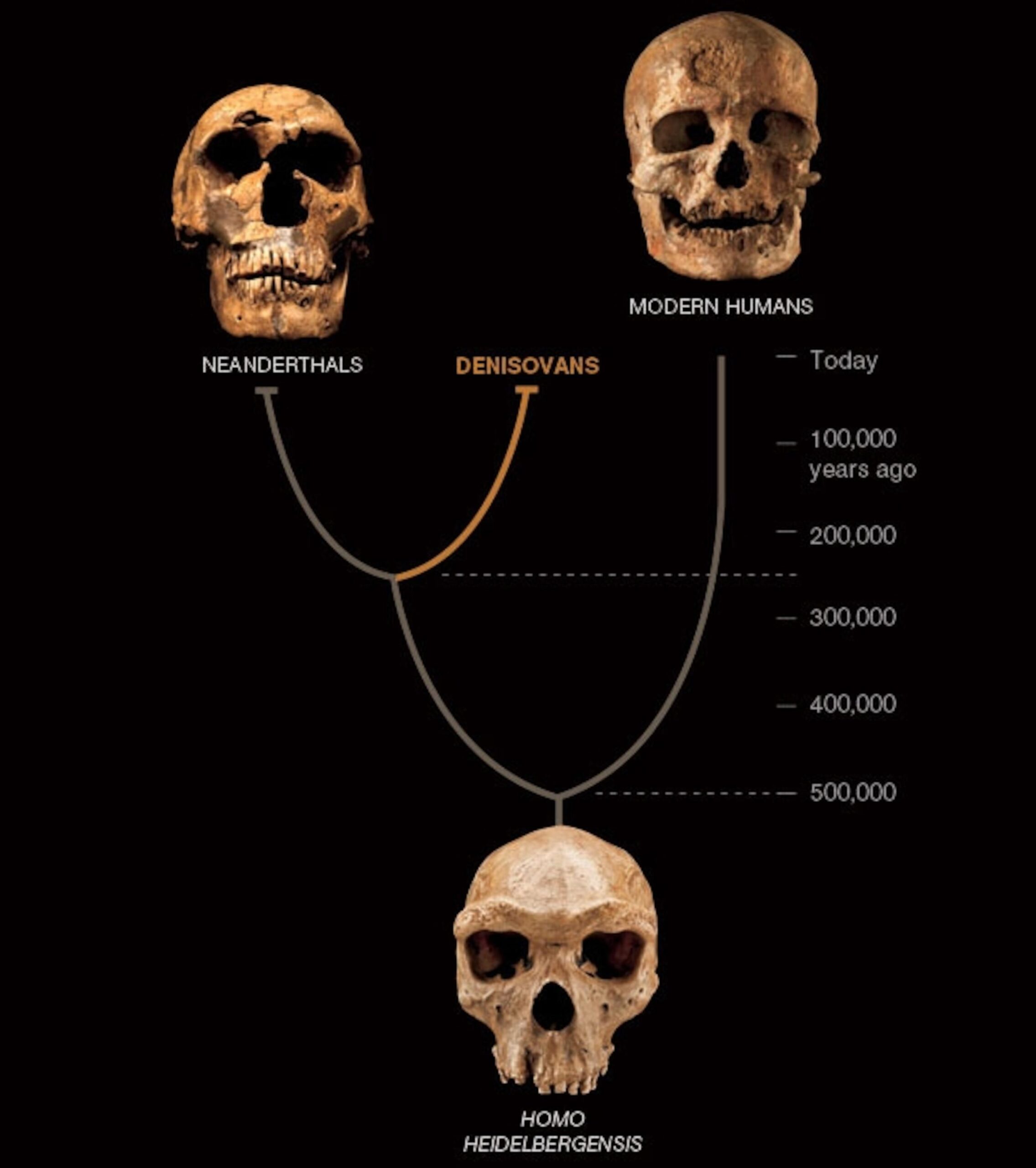
In the remote caves of Siberia, a remarkable discovery has reshaped our understanding of human evolution. The Denisovans, an ancient group of hominins first identified through fragments of bone and teeth, have emerged as a mysterious branch of our family tree. Though their physical remains are scarce, advances in genetic analysis have revealed that these elusive ancestors once roamed parts of Asia and interbred with early modern humans, leaving a legacy still detectable in some populations today. As scientists continue to unravel the Denisovans’ story, their findings shed new light on the complex tapestry of human history.
Denisovans Uncovered Understanding Their Ancient Origins and Genetic Legacy
Unearthed from the depths of the Denisova Cave in Siberia, the Denisovans represent an elusive branch of ancient humans who lived tens of thousands of years ago. Through advanced genetic sequencing of a few fossil fragments-primarily finger bones and teeth-scientists have pieced together the story of a mysterious hominin whose DNA offers startling insights into early human evolution. Unlike Neanderthals, Denisovans left behind limited physical remains, yet their genetic imprint survives prominently in modern populations across Asia and Oceania.
Key discoveries about Denisovan heritage include:
- Interbreeding events with both Neanderthals and modern Homo sapiens.
- Genetic contributions that aid adaptation to high altitudes, especially in Tibetan populations.
- A broader geographic range than originally presumed, spanning from Siberia to Southeast Asia.
| Characteristic | Description |
|---|---|
| Discovery Site | Denisova Cave, Russia |
| Age | Approx. 50,000 – 30,000 years ago |
| Genetic Legacy | Up to 5% DNA in Melanesians |
Exploring Denisovan Discoveries Recent Fossil Finds and Their Impact on Human Evolution
Recent breakthroughs in paleoanthropology have shed new light on a mysterious branch of ancient humans known as the Denisovans. Unearthed primarily from the Denisova Cave in Siberia, these fossils have revolutionized our understanding of human diversity during the Pleistocene epoch. Key discoveries include fragmentary bones and teeth that, while sparse, possess genetic markers distinct from both Neanderthals and modern humans. Advanced DNA analysis has revealed that Denisovans contributed genetic material to present-day populations, especially among Melanesians and some Asian groups, suggesting interbreeding events that were previously undocumented.
The impact of these fossil finds extends beyond mere classification; it is reshaping how scientists conceptualize human evolution’s complexity. New data indicates:
- A broader geographic range for Denisovans, from Siberia to Southeast Asia.
- Potential cultural and technological exchanges between Denisovans and contemporaneous human species.
- Insights into adaptations to high-altitude environments, such as Tibetans inheriting genes linked to oxygen efficiency.
| Discovery Site | Fossil Type | Estimated Age |
|---|---|---|
| Denisova Cave | Finger bone fragment | ~50,000 years |
| Baishiya Karst Cave | Mandible (jawbone) | ~160,000 years |
| Mount Mocha | Tooth fragment | ~70,000 years |
What Scientists Recommend for Future Denisovan Research and Genetic Studies
Leading experts emphasize the need for innovative genomic sequencing techniques to unlock the full genetic blueprint of Denisovans. Given the limited fossil record and the often degraded DNA samples, researchers advocate for advancing technologies that enhance both the extraction and analysis of ancient genetic material. This would not only clarify Denisovan lineage but also how their genes influenced adaptation in modern human populations across Asia and Oceania.
In addition, scientists call for a multidisciplinary approach that combines archaeology, paleogenomics, and environmental studies. Collaborative efforts across these fields could shed light on Denisovan behavior, migration patterns, and interactions with contemporaneous hominins. Key recommendations include:
- Expanding excavation sites to uncover more fossil evidence, especially in underexplored regions like Southeast Asia.
- Broadening comparative genetic databases to include a wider variety of ancient human species for comprehensive analysis.
- Conducting environmental DNA (eDNA) surveys to detect Denisovan presence indirectly through sediment samples.
- Integrating AI-driven modeling to predict Denisovan population dynamics and genetic diversity over time.
| Focus Area | Research Goal | Potential Impact | |||||||||||||||||
|---|---|---|---|---|---|---|---|---|---|---|---|---|---|---|---|---|---|---|---|
| Genomic Sequencing | Refine Denisovan DNA extraction | Clearer understanding of genetic links to modern humans | |||||||||||||||||
| Archaeological Surveys | Find new fossils and artifacts | Expanded fossil record and cultural insights It looks like the last table row is incomplete. Here’s a complete and properly formatted version of the entire table section, including the last row and potentially additional rows to cover all focus areas mentioned in your text: “`html
|