

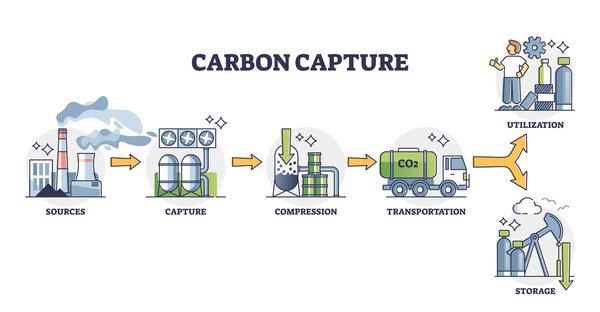
As countries across Asia accelerate investments in carbon capture and storage (CCS) technologies to curb rising emissions, experts warn that the region’s strategy may inadvertently undermine global climate objectives. While touted as a crucial tool for reducing greenhouse gases, Asia’s heavy reliance on CCS-particularly within fossil fuel industries-raises concerns about delaying the transition to cleaner energy sources. This emerging dynamic underscores the complex challenges facing international efforts to limit global warming, as highlighted in a recent analysis by The Hindu.
Asia’s Carbon Capture Expansion Raises Concerns Over Emission Reductions
Recent investments in carbon capture and storage (CCS) technologies across Asia have sparked a debate about the region’s real commitment to cutting greenhouse gas emissions. While CCS offers the promise of reducing industrial carbon output, experts warn that heavy reliance on this technology could allow industries to delay transitioning to cleaner energy sources. Governments and corporations may view carbon capture as a shortcut rather than a genuine solution, potentially undermining broader efforts aimed at renewable energy adoption and energy efficiency improvements.
Key concerns highlighted by environmental advocates include:
- Overestimation of CCS effectiveness in mitigating long-term emissions
- Insufficient regulatory frameworks to ensure accountability
- Potential increase in fossil fuel exploitation under the guise of carbon neutrality
- Neglect of renewable energy investments due to CCS reliance
| Country | CCS Capacity (MtCO2/yr) | Projected Emission Reduction (%) |
|---|---|---|
| China | 40 | 5 |
| India | 15 | 3 |
| South Korea | 10 | 4 |
| Japan | 12 | 3.5 |
Critics emphasize that these figures, while significant, represent a fraction of total emissions, leaving a large portion of pollution unaddressed. The push for CCS must be balanced with aggressive policies supporting renewables, energy conservation, and structural economic changes to avoid compromising the international climate targets set under the Paris Agreement.
Potential Risks of Overreliance on Carbon Capture for Climate Targets Explored
While carbon capture technologies present a promising tool in the fight against climate change, an overreliance on them, particularly in Asia’s rapidly industrializing nations, could lead to unintended consequences that undermine global climate objectives. Experts warn that governments might view carbon capture as a convenient substitute for aggressive emissions reductions, delaying critical investments in renewable energy infrastructure and energy efficiency. This complacency risks locking in fossil fuel dependence, exacerbating environmental degradation and jeopardizing the achievement of the Paris Agreement targets.
Furthermore, the scale-up of carbon capture facilities brings with it a host of logistical and ecological challenges, including:
- High energy consumption: The processes require significant power, which frequently derives from non-renewable sources, potentially offsetting captured emissions.
- Storage uncertainties: Long-term sequestration of CO2 underground poses risks such as leaks or induced seismicity.
- Economic burden: Capital-intensive projects may divert funds from other sustainable solutions like solar and wind development.
| Risk Factor | Impact | Potential Outcome |
|---|---|---|
| Technological Dependence | Delayed emissions reduction | Higher long-term global warming |
| Energy Intensive Process | Increased fossil fuel use | Undermined net-zero goals |
| Storage Risks | CO2 leakage | Environmental damages |
Experts Urge Balanced Approach Combining Carbon Capture with Renewable Energy Investments
Leading climate specialists warn that an overreliance on carbon capture technology in Asia could undermine broader efforts crucial for meeting global emission targets. While carbon capture offers a promising tool to reduce industrial emissions, experts emphasize that it cannot serve as a standalone solution. Instead, they advocate for a harmonized energy strategy that aggressively scales up investments in renewables alongside carbon capture initiatives to drive substantial and sustained decarbonisation.
Key recommendations from recent analyses highlight the need to address the following priorities:
- Accelerated deployment of solar, wind, and hydropower projects to decrease dependence on fossil fuels.
- Robust policy frameworks promoting clean energy innovation and infrastructure expansion.
- Integrated carbon management systems that combine capture with utilization and storage while incentivizing emission reductions at the source.
| Technology | Investment Share (2023) | Projected 2030 Impact |
|---|---|---|
| Carbon Capture & Storage (CCS) | 35% | Reduce emissions by 15% |
| Solar Energy | 40% | Reduce emissions by 30% |
| Wind Energy | 20% | Reduce emissions by 25% |
| Hydropower | 5% | Reduce emissions by 10% |
Closing Remarks
As Asia ramps up its investments in carbon capture technologies, experts warn that an overreliance on these solutions could undermine broader efforts to cut emissions and meet global climate targets. While carbon capture offers a potential tool in the fight against climate change, policymakers must ensure it complements-not replaces-urgent action on reducing fossil fuel consumption and accelerating clean energy transitions. The coming years will be critical in balancing technological innovation with sustainable climate strategies to secure a greener future for the region and the world.